
How to remove stubborn oil stains from silk garments
Advertisements
You can remove stubborn oil stains from delicate silk garments by using dry absorbent powders to lift lipid molecules out of the fabric before treating the area with cool water and a pH-neutral cleanser. The process relies on capillary action to pull grease away from the fragile protein weave without mechanical friction.
This approach helps preserve washable silk shirts, dresses, ties, and pillowcases that have come into contact with cooking oils, salad dressings, butter, or face creams. The main challenge is acting before the grease oxidizes and sets permanently, while avoiding harsh chemicals that strip the natural luster or weaken silk threads.
Understanding silk fiber structure and oil absorption
Silk is a natural protein fiber produced primarily by the larvae of the Bombyx mori silkworm. The fiber consists mainly of fibroin held together by sericin, creating a smooth triangular prism structure that reflects light and gives the material its signature sheen. Unlike synthetic polyester or nylon, silk fibers absorb moisture and natural lipids readily. When an oily substance touches silk, it penetrates the core structure quickly, bonding with the organic filaments.
Because silk fibers lose substantial tensile strength when wet, standard stain-removal practices like vigorous scrubbing, twisting, or hot water immersion cause irreversible fiber distortion. Friction roughs up the smooth surface, creating lighter, scuffed areas that mimic permanent stains even after the grease is gone. Successfully attempting to remove oil from silk requires keeping mechanical contact to an absolute minimum and allowing absorbent materials to do the lifting.
Commercial stain removers designed for cotton or synthetic garments often contain enzymes, chlorine, or high-alkaline degreasers. Protease enzymes, in particular, digest protein bonds and will dissolve silk over time. For this reason, oil stain treatments for silk must rely on neutral or slightly acidic agents and fine powders rather than conventional laundry treatments.
Immediate steps for fresh oil spills on silk
When an oil spill happens, time is critical. Liquid fats and cosmetic oils remain mobile on the surface for a brief period before deeply setting into the weave. Immediate intervention prevents the lipid from spreading horizontally across adjacent fibers.
Initial containment actions
- Lay the garment flat on a clean, dry, non-porous surface so the oil does not seep through to other layers of the fabric.
- Place a clean, dry white paper towel directly underneath the stained section to catch oil driven through the back.
- Take a second clean white cloth or paper towel and gently press downward onto the stain without rubbing back and forth.
- Repeat the blotting motion with clean sections of the cloth until no further liquid transfers to the paper.
Never apply warm or hot tap water directly to a fresh grease mark. Water repels oil and forces the stain outward, creating a wider grease ring while simultaneously causing water-spotting on untreated silk finishes. Dry blotting must always precede any liquid treatment.
Using dry absorbent powders for stubborn grease
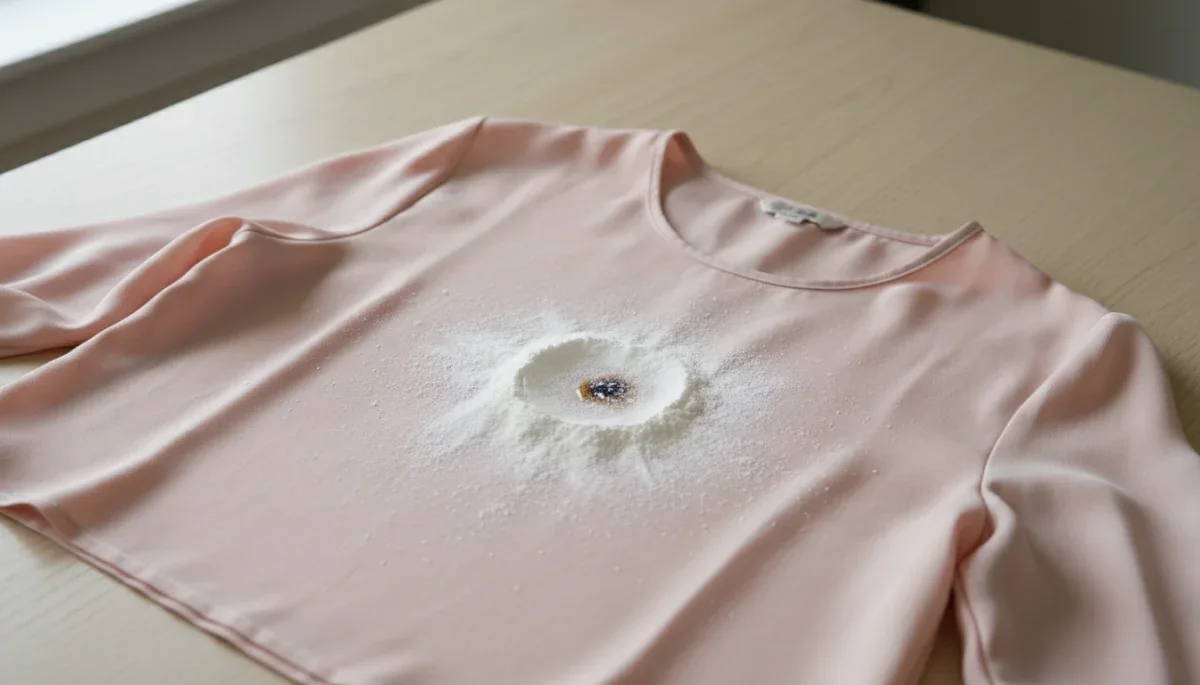
Dry extraction is the safest way to treat oil on delicate silk because it requires zero moisture and zero friction. Finely ground mineral and starch powders have microscopic pores that pull grease up and out of the textile fibers via passive absorption.
Common household items like cornstarch, arrowroot powder, baking soda, and unscented cosmetic talcum powder work well for this stage. Cornstarch and arrowroot are particularly effective because their fine particle size maximizes surface area contact against the smooth silk threads without scratching the surface.
Powder application process
- Dust a generous layer of cornstarch or talcum powder directly over the oily spot, covering it by at least a quarter of an inch.
- Leave the garment undisturbed in a well-ventilated, room-temperature area for a minimum of eight hours or overnight.
- Gently brush away the powder using a soft-bristled brush or by tapping the reverse side of the fabric over a trash bin.
- Inspect the fabric against a light source; if grease residue remains, repeat the application with fresh dry powder for another full cycle.
For stubborn or older oil spots, letting the powder sit for up to twenty-four hours gives the fine granules enough time to draw deep-seated lipids out from between the tight weaves of charmeuse, habotai, or crepe de chine.
Spot cleaning and hand washing with gentle cleansers
If a faint shadow remains after the dry powder treatment, a targeted spot cleaning followed by a full rinse is necessary. This step breaks down any microscopic residue left behind on the surface fibers.
Use a specialized silk wash or a clear, mild, pH-neutral dish soap free of bleach, dyes, and fragrance. Dish soaps formulated for hand washing dishes contain surfactants that dissolve grease molecules at ambient room temperatures, making them safe for silk when diluted properly.
Step-by-step spot wash technique
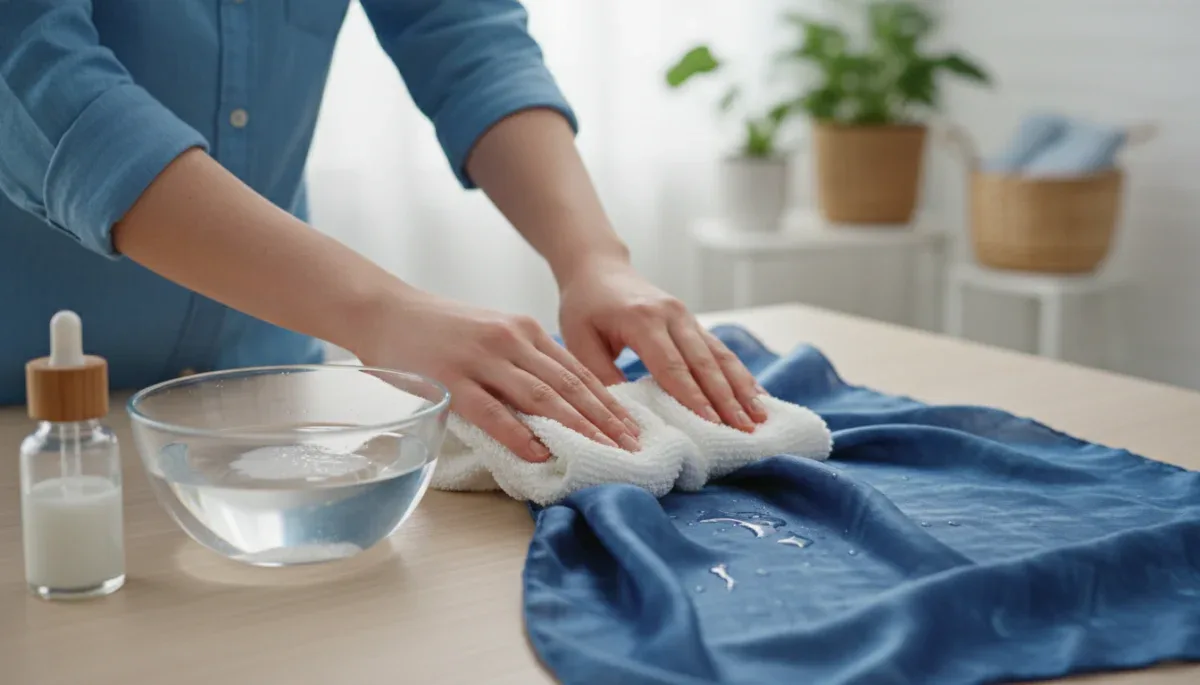
- Mix one drop of mild liquid dish soap into two cups of cool, distilled water to create a dilute cleaning solution.
- Dip the corner of a clean white cotton swab or microfiber cloth into the liquid, squeezing out excess moisture so it remains damp rather than soaked.
- Dab the solution onto the oil stain from the outer edges working inward to avoid creating an expanding watermark.
- Submerge the entire garment in a basin filled with cool water to rinse the cleanser evenly across all panels.
Submerging the entire item during the final rinse is essential. Spot-treating silk without rinsing the entire garment often leaves distinct mineral or water rings as the fabric dries. Submersion ensures even moisture distribution across the weave, preventing demarcation lines.
Common mistakes that permanently damage silk
Silk requires precise handling because improper stain-removal techniques cause physical and chemical damage that cannot be reversed. Avoiding common household shortcuts will protect the garment's longevity.
Heat is the primary cause of permanent oil bonding in fabrics. Never place a silk garment in an automatic dryer, and avoid using a hairdryer or an iron on an area that still contains oil traces. Heat polymerizes lipid bonds, effectively fusing the oil into the protein structure of the fiber.
Vigorous rubbing, using rough sponges, or scratching at the fabric will cause fiber fibrillation, where tiny filaments break and create a fuzzy, discolored patch. Additionally, household vinegar and lemon juice, while useful for other textiles, should be kept away from oil on silk; acidic solutions do not break down non-polar lipids and can cause color bleeding on acid-dyed silk fabrics.
Handling dry-clean-only tags and aged grease spots
Before applying any liquid or powder, read the garment care label carefully. Silk garments fall into two distinct manufacturing categories: washable silk and structured dry-clean-only silk. Structured garments like blazers, lined dresses, and ties often contain internal interfacings, shoulder pads, or delicate linings that warp or shrink if exposed to water.
If the label reads "Dry Clean Only", do not attempt liquid spot treatments at home. Applying water to these pieces can dissolve garment glues or cause uneven shrinkage between the shell fabric and the inner lining. You may safely apply dry cornstarch to absorb fresh grease on dry-clean-only garments, but you should take the item to a professional cleaner for the remaining treatment.
When dropping off the garment, point out the exact location of the spill and inform the cleaner what type of oil caused the stain. Professional cleaners use non-aqueous solvents like perchlorethylene or hydrocarbon solutions that dissolve lipids effectively without water contact, preserving the structural integrity and finish of delicate tailored silks.
At a glance
| Treatment method | What to know |
|---|---|
| Dry absorbent powder | Cornstarch or talc absorbs fresh oil overnight without moisture or friction. |
| Diluted dish soap | Surfactants lift lipid residue when mixed with cool water and applied gently. |
| Full-garment submersion | Rinsing the entire piece in cool water prevents visible water rings. |
| Professional dry cleaning | Solvent-based cleaning is necessary for lined or structured silk items. |
Frequently asked questions
Can baking soda ruin silk fabric?
Baking soda can cause mild alkaline damage if left damp on silk for long periods, but dry baking soda is generally safe for brief dry applications. For sensitive silk weaves, neutral powders like cornstarch or arrowroot provide a safer alternative with less risk of altering fiber pH.
How do you fix a water ring left on silk?
Dip the entire garment in a basin of cool, distilled water to saturate the fibers evenly, then lay it flat on a clean towel to dry. Distilled water dissolves mineral boundaries without adding new deposits, smoothing out the appearance of the watermark across the garment surface.
Does vinegar remove grease stains from silk?
White vinegar does not dissolve oil stains because grease consists of non-polar lipids that do not react with mild acids. Rely instead on dry absorbents like cornstarch to lift the oil, followed by diluted pH-neutral soap to wash away the remaining residue.
Can an old, set-in oil stain be removed from silk?
Old oil stains can sometimes be lifted with multiple dry powder applications, but success depends on whether the garment was exposed to heat. If the oil was ironed or heated in a dryer, the stain is likely permanent and requires evaluation by a dry cleaner.
The bottom line
To safely clear oil from silk, rely on dry absorbents and gentle spot cleaning rather than aggressive scrubbing or hot water. Letting cornstarch pull lipids from the fabric overnight protects delicate protein threads from distortion. Before treating any garment at home, always check the care label to confirm whether the fabric is washable or requires professional dry cleaning.
Written by
Maria Eduarda
Maria Eduarda writes about clothing & accessories for inserdernews.com. Each article explains how things work, compares published details such as prices, policies and program rules, and points readers to the official source before they decide.