
Merino Wool vs Cashmere: Warmth and Fabric Comparison
Advertisements
Cashmere provides higher warmth per ounce than merino wool because its ultra-fine fibers create loftier air pockets that trap body heat efficiently. Merino wool delivers substantial warmth while offering superior moisture management, natural elasticity, and abrasion resistance for active wear. Choosing between them depends on whether your priority is lightweight luxury or rugged everyday performance.
This comparison helps shoppers looking for winter knitwear decide where to allocate their wardrobe budget based on activity level, layering needs, and maintenance routines. The catch is that both fabrics vary widely in quality depending on fiber grade, ply count, and garment construction, meaning an inexpensive cashmere sweater can easily underperform a high-grade merino wool piece.
How fiber structure drives thermal insulation
Insulation in clothing does not come from the fiber solid mass itself, but from the still air trapped within the fabric structure. Both merino wool and cashmere are natural protein fibers derived from animal coats, but their physical structures create different microclimates against your skin.
Merino wool comes from Merino sheep, bred primarily in Australia, New Zealand, and South America. The fibers have a natural crimp, which creates a three-dimensional spring-like architecture. This crimp traps pockets of dead air, preventing ambient cold from reaching the body while allowing air circulation during physical exertion.
Cashmere is the soft undercoat combed or sheared from Cashmere goats, predominantly raised in regions with extreme climate swings like Mongolia and inner Asia. The individual fibers of cashmere are significantly finer than standard sheep wool and feature a hollow or semi-hollow core. This hollow characteristic, combined with a high degree of natural curl, gives cashmere a lofty, pillowy volume without adding physical weight. When spun into yarn, cashmere traps a higher volume of non-circulating air relative to its mass, generating high thermal resistance in low-exertion settings.
Warmth-to-weight ratio and layering performance
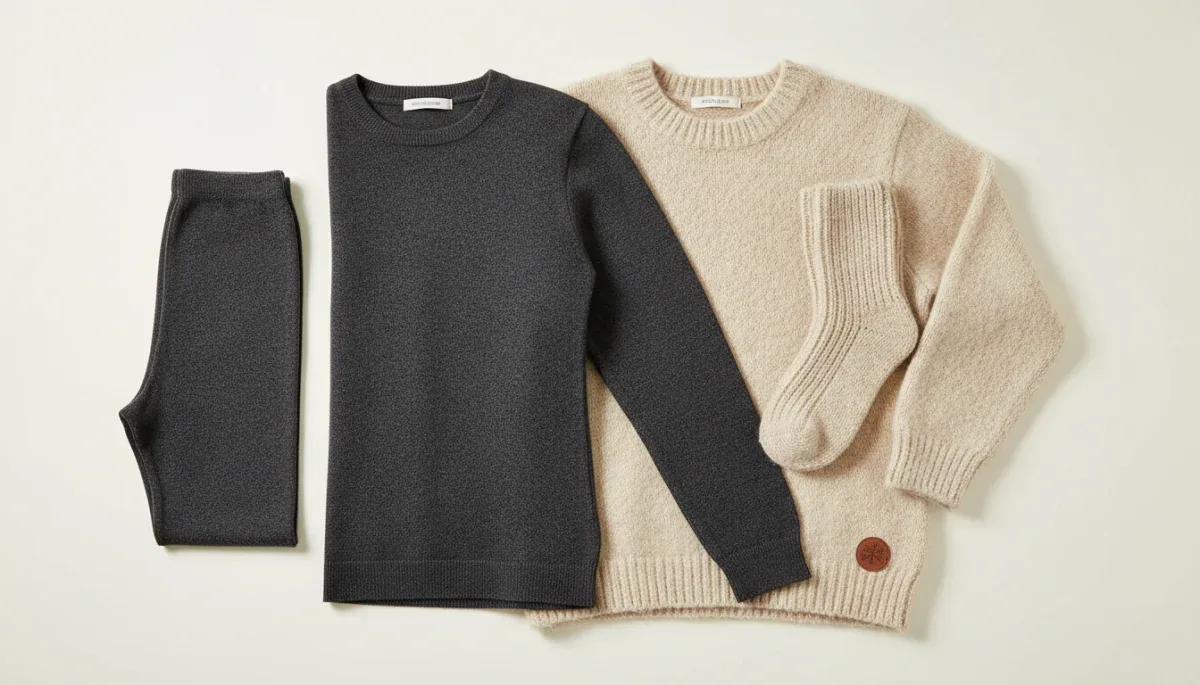
When evaluated strictly on warmth-to-weight ratio, cashmere generally outperforms merino wool. A thin, single-ply cashmere knit can match the insulating capacity of a noticeably heavier merino wool knit, making cashmere an outstanding choice for lightweight cold-weather dressing under structured coats or blazers.
However, the concept of warmth changes once physical activity or changing temperatures enter the equation. Merino wool excels at dynamic thermoregulation. When your body generates heat and moisture, merino fibers absorb water vapor into their inner structure while repelling liquid moisture from the outer surface. This prevents the clammy chill that occurs when sweat cools next to your skin.
Key factors for layering and insulation
- Moisture buffering: Merino wool can absorb up to thirty percent of its dry weight in moisture without feeling wet to the touch.
- Active warmth: Merino maintains its thermal structure even during moderate exertion, preventing overheating and rapid cooling cycles.
- Static warmth: Cashmere provides superior heat retention during seated, low-movement, or indoor-to-outdoor transitions.
- Bulk reduction: Cashmere delivers substantial thermal barrier protection with minimal garment volume under tailoring.
Durability, pilling, and long-term wear
While warmth determines comfort in freezing weather, durability dictates how many seasons your investment will last. The physical properties that make cashmere exceptionally soft also make it more fragile under friction.
Cashmere fibers have relatively short staple lengths and thinner diameters, making them prone to surface friction. When underarm areas, bag straps, or outerwear rub against cashmere, the microscopic fiber ends work free and tangle into small balls known as pills. While pilling can be removed with a fabric comb, constant shedding eventually thins the knit fabric over time.
Merino wool possesses longer fiber staples and stronger tensile strength with natural elasticity. A merino wool garment can stretch and recover its shape readily without breaking fibers. This makes merino far more resilient for daily commutes, wearing backpacks, and frequent wear. For rugged outdoor use or base layers worn beneath technical shells, merino wool offers superior structural longevity and friction resistance.
Odor resistance and breathability
Breathability directly impacts how warm you feel because trapped humidity eventually causes chilling. Both fibers are naturally breathable because they are protein-based rather than synthetic petroleum derivatives like polyester or acrylic.
Merino wool holds a distinct advantage in odor management. The lanolin residues and cellular composition of merino sheep fibers naturally create a hostile environment for odor-causing bacteria. You can wear a merino base layer multiple times between washes simply by airing it out overnight. This makes it the standard choice for multi-day travel, hiking, and daily winter activewear.
Cashmere is also naturally breathable and far less prone to retaining odors than synthetic knits. However, because cashmere is softer and often knitted more loosely to maximize fluffiness, it can absorb body oils more readily. Once body oils penetrate the core of fine cashmere, they can attract ambient dust and reduce fiber loft until properly cleaned.
Care requirements and seasonal storage
Proper garment care directly preserves the insulating properties of both fabrics. Trapped dirt, body oils, and improper drying methods compress fiber air pockets, reducing how much warmth the garment can retain over time.
Merino wool is relatively straightforward to maintain. Many contemporary merino wool garments undergo processes that allow gentle machine washing on cold, delicate cycles using wool-safe detergents. It retains its shape well when laid flat to dry and resists creasing naturally.
Cashmere requires more deliberate handling. Hand-washing in lukewarm water with a mild, pH-neutral wool wash is generally recommended over frequent dry cleaning, as commercial dry cleaning solvents can strip natural conditioning oils from delicate goat hair. Never wring or hang wet cashmere, as water weight will stretch and distort the knit structure permanently.
Essential steps for preserving knitwear insulation
- Wash temperature: Always use cold or lukewarm water to prevent protein fibers from shrinking and felting.
- Drying technique: Press water out between clean towels and dry flat away from direct heat sources or sunlight.
- Storage habits: Always fold knits rather than hanging them to prevent shoulder dimpling and vertical sagging.
- Pest protection: Store clean garments in breathable cotton storage bags with cedar blocks to prevent moth damage during off-seasons.
At a glance
| Factor | What to know |
|---|---|
| Warmth to weight | Cashmere provides higher heat retention per ounce due to lofty, semi-hollow fibers. |
| Active thermoregulation | Merino wool manages moisture and body heat better during physical movement and sweat generation. |
| Durability and friction | Merino wool resists abrasion and retains its shape longer under frequent daily wear. |
| Care requirements | Cashmere demands gentle hand-washing, while many merino pieces tolerate gentle machine cycles. |
Frequently asked questions
Is cashmere warmer than merino wool in extreme cold?
Cashmere is warmer ounce-for-ounce because its fine, lofty fibers trap more still air near the skin. In stationary cold environments, a medium-weight cashmere sweater typically provides more insulation than a merino wool sweater of identical weight and construction.
Can you wear merino wool as a base layer for sports?
Merino wool is ideal for sports and high-exertion cold-weather activities because it moves moisture vapor away from your skin. It prevents post-exercise chills by maintaining thermal insulation even when handling high levels of perspiration.
Why does cashmere pill faster than merino wool?
Cashmere pills more quickly because its individual fibers are shorter, thinner, and softer than sheep wool. Surface friction from normal body movement or outer coats pulls these fragile fiber tips loose, tangling them into small surface pills.
Which fabric is better for everyday office wear?
Merino wool is generally better for everyday office rotation due to its elasticity, wrinkle recovery, and resistance to bag strap friction. Cashmere is best reserved for less abrasive settings or layered under soft, tailored outerwear.
The bottom line
Cashmere delivers unmatched lightweight warmth and a plush tactile feel, making it the premier choice for stationary cold-weather dressing and refined layering. Merino wool provides balanced insulation with high moisture management and durability, making it the practical champion for daily commuting, travel, and active winter pursuits. Before buying either fabric, check the garment care label for yarn ply, fiber density, and cleaning instructions to ensure the piece matches your lifestyle and maintenance preferences.
Written by
Maria Eduarda
Maria Eduarda writes about clothing & accessories for inserdernews.com. Each article explains how things work, compares published details such as prices, policies and program rules, and points readers to the official source before they decide.