
How to clean suede boots at home without water stains
Advertisements
You can clean suede boots at home without causing water stains by working dry whenever possible, treating specific spots with absorbent powders, and evening out moisture across the entire panel if liquid cleaning becomes necessary. Suede is an open-grain leather that absorbs moisture quickly, which causes mineral deposits and displaced dye to settle into visible dark rings when water dries unevenly.
This process helps anyone looking to refresh casual boots, dress footwear, or work boots made from genuine split-leather or nubuck without buying expensive machinery. The catch is that suede demands strict patience, as working on wet material or using aggressive rubbing will permanently flatten the delicate fibers known as the nap.
Understanding why suede develops water spots and stains
Suede is crafted from the soft underside of animal hide, typically calf, pig, or goat skin. Because the outer protective grain layer is buffed away or split off during tanning, the surface consists of microscopic open fibers. These fibers create the soft, velvety texture called the nap, but they also leave the material exceptionally porous and vulnerable to liquid intrusion.
When a water drop lands on untreated suede, it penetrates immediately rather than beading up. As the moisture evaporates from the center outward, it pulls natural oils, tanning agents, and microscopic dirt particles along with it. When the perimeter of the damp area finally dries, these concentrated compounds form a distinct, dark line known as a water ring. Preventing this reaction requires keeping cleaning tools dry or treating the entire panel uniformly so that no distinct drying boundary can develop.
Essential dry tools for routine suede care
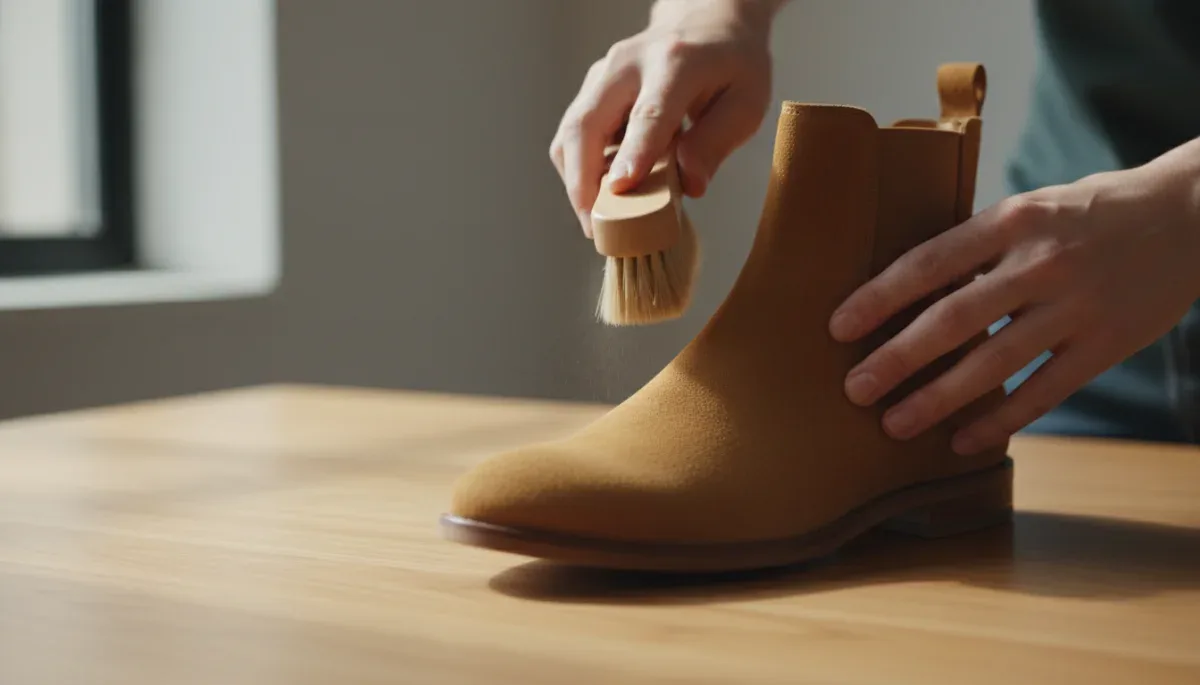
The safest way to clean suede boots is to avoid liquids entirely for general maintenance. A dedicated suede brush and an eraser block can remove the vast majority of day-to-day dust, road grit, and surface scuffs without disturbing the underlying dyes. Using dry friction lifts trapped particles from between the leather fibers before they can bond with humidity or oils.
Core items for dry suede cleaning
- Specialized suede brush: Features soft brass or nylon bristles surrounded by natural bristles to sweep away embedded dirt without tearing the hide.
- Crepe rubber brush: Uses sticky, flexible rubber ribbons to grab lint, loose hair, and light surface dust while realigning the nap.
- Suede cleaning eraser: A crumbly rubber bar designed to abrade away marks, dirt lines, and surface grime progressively.
- Clean microfiber towel: Absorbs loose surface debris and helps smooth down the surface during dry buffing.
Always inspect your brushes before use to ensure they are free from dark shoe cream or dirt from previous cleanings. Running a dirty brush across light tan or gray suede can transfer old residues and create fresh discoloration that is difficult to lift.
Removing dry mud, dust, and stubborn scuffs
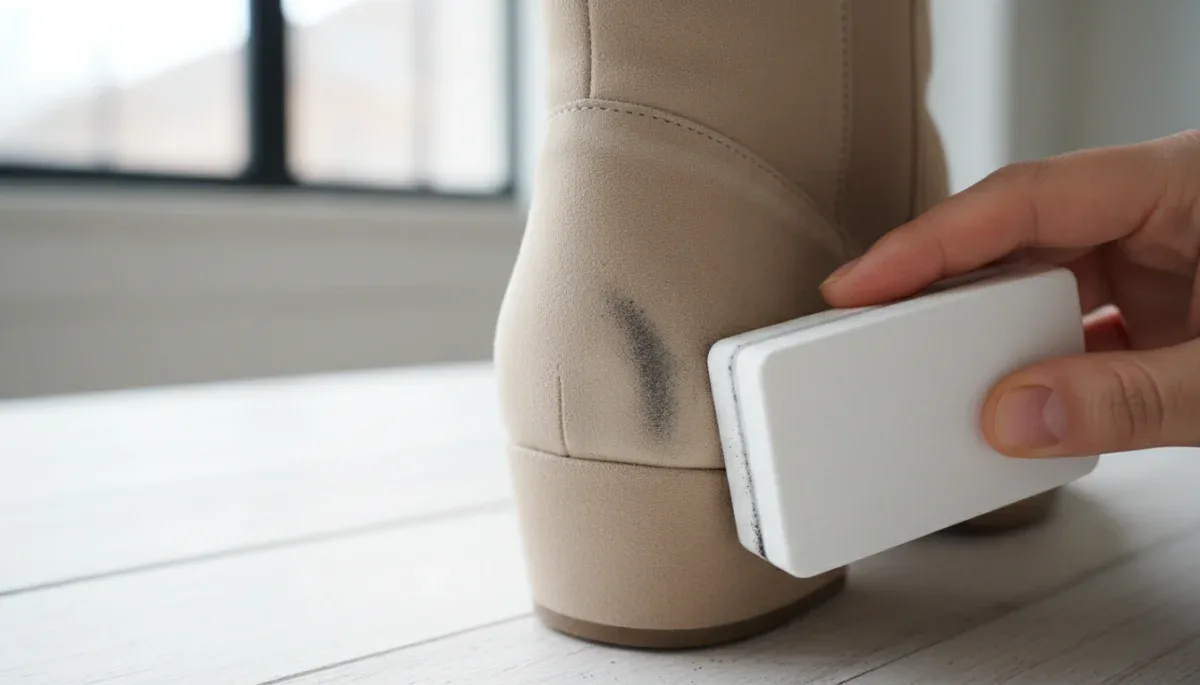
When boots encounter mud or heavy road grit, the most critical step is allowing the mud to dry completely before touching it. Attempting to wipe away wet mud pushes the liquefied dirt deep into the porous grain, creating an ingrained stain. Once the mud is brittle and bone dry, a stiff-bristle suede brush can shatter and dislodge the crust with light, short strokes.
Begin by brushing in a single direction to clear out the bulk of the dry debris. Once the loose earth falls away, brush back and forth with moderate pressure to work out particles trapped near the base of the fibers. Follow this by using a clean suede eraser on any lingering dark lines or scuffs left behind by shoe contact or pavement friction.
Rub the eraser back and forth over the scuff with steady, gentle pressure, exactly as you would use a pencil eraser on paper. The eraser will shed small crumbs that collect the soil. Brush these crumbs away frequently with your dry brush so you can monitor your progress without overworking the leather.
Treating oil, grease, and liquid spills safely
Oil-based stains from food drops, motor grease, or salad dressings require an immediate absorbent response rather than wet scrubbing. Water will not break down oil on suede, and applying soap directly can trap the grease within the fibers while leaving a noticeable soapy ring. Absorbent powders work by drawing the liquid fat upward out of the hide through capillary action.
Steps for lifting fresh oil marks
- Blot any wet excess oil immediately using a dry paper towel without pressing the liquid deeper into the shoe.
- Cover the entire greasy spot with a thick layer of cornstarch, baking soda, or talcum powder.
- Allow the powder to sit undisturbed on the boot for at least six to eight hours, or overnight, to draw out the grease.
- Sweep away the saturated powder with a dry suede brush to inspect the area.
If a faint shadow remains after the powder treatment, dab a clean cotton cloth lightly with white distilled vinegar or isopropyl alcohol. These liquids cut residual grease and evaporate rapidly without carrying the same ring-forming mineral load as tap water. Dab gently without saturating the leather.
Handling existing water stains and overall wet cleaning
When boots already have visible water rings or extensive salt lines from winter walking, the solution is counter-intuitive: you must lightly dampen the entire exterior surface of the boot. By moistening the whole shoe evenly, you eliminate the wet-dry margin where mineral rings settle, allowing the leather to dry at a single, consistent rate.
Fill a small bowl with lukewarm distilled water. Tap water contains dissolved minerals like calcium and magnesium that can leave their own chalky residue, so distilled water is preferable. Dip a clean cellulose sponge or microfiber cloth into the water and wring it out until it is barely damp, not dripping wet.
Wipe the entire shoe evenly from seam to seam, paying particular attention to blending the edges of the existing water stain into the surrounding material. Do not saturate the hide through to the lining; apply only enough moisture to darken the exterior shade uniformly. Once damp, stuff the boots with undyed paper towels or shoe trees to maintain their shape, and allow them to dry in a well-ventilated room away from direct sunlight, radiators, or forced-air heat vents.
Restoring the nap and applying protective spray
After moisture evaporates completely, suede often feels slightly stiff or flattened. This stiffness occurs because the wet fibers stick together as they dry. Restoring the original velvet feel requires waking up the nap with gentle dry brushing once the boots are entirely dry to the touch.
Take your suede brush or a clean, dry toothbrush and brush the entire boot using gentle, circular motions. This action separates the individual fibers and lifts them upright, restoring the uniform matte appearance of the nap. Brush in one final direction across each panel to align the grain neatly.
Once restored, shield the boots against future moisture by applying a quality suede protector spray. Hold the can approximately six to eight inches away and apply a light, even mist across the entire shoe. Allow the first coat to dry for twenty minutes before applying a second light layer. This hydrophobic barrier forces future water splashes to bead on the surface rather than soaking into the leather.
At a glance
| Factor | What to know |
|---|---|
| Wet mud | Let it dry completely before brushing to avoid pushing grit deep into the nap. |
| Oil spots | Cover with cornstarch overnight to draw grease out before brushing clean. |
| Existing water rings | Dampen the entire panel evenly with distilled water to remove hard drying edges. |
| Drying method | Air dry at room temperature away from heaters to prevent leather cracking. |
Frequently asked questions
Can I use regular tap water to clean my suede boots?
Distilled water is much safer than tap water for suede care. Tap water contains minerals that can remain behind after evaporation, creating white chalky marks or dark outlines. If you must use moisture, distilled water ensures no dissolved solids settle into the fibers.
Will white vinegar discolor colored suede boots?
White distilled vinegar rarely discolors quality suede when used sparingly on a clean cloth. However, heavily dyed or bright colors can occasionally bleed. Always test a hidden area, such as the inner tongue, before applying vinegar to visible areas.
How do I dry suede boots quickly after cleaning?
You should never accelerate suede drying with hair dryers, direct sunlight, or radiators. High heat shrinks the leather hide and makes it brittle. Stuff the boots with plain paper towels to absorb interior dampness and let them dry naturally at room temperature.
How often should I apply a suede protector spray?
Apply a protective spray every three to six months for regularly worn boots, or immediately after a thorough cleaning. If you wear your boots frequently in rain or winter slush, applying a fresh barrier monthly provides the best defense against stains.
The bottom line
Cleaning suede boots successfully at home relies on dry mechanical action first, followed by careful moisture control when liquids cannot be avoided. By using erasers on scuffs, absorbing oils with powders, and dampening full panels evenly to clear water marks, you can maintain your footwear without damaging the soft texture. Before starting, always test any liquid or cleaner on a discreet patch of the tongue to confirm the dye remains stable.
Written by
Maria Teixeira
Maria Teixeira writes about home & kitchen, clothing & accessories and shoes & bags for inserdernews.com. Each article explains how things work, compares published details such as prices, policies and program rules, and points readers to the official source before they decide.